


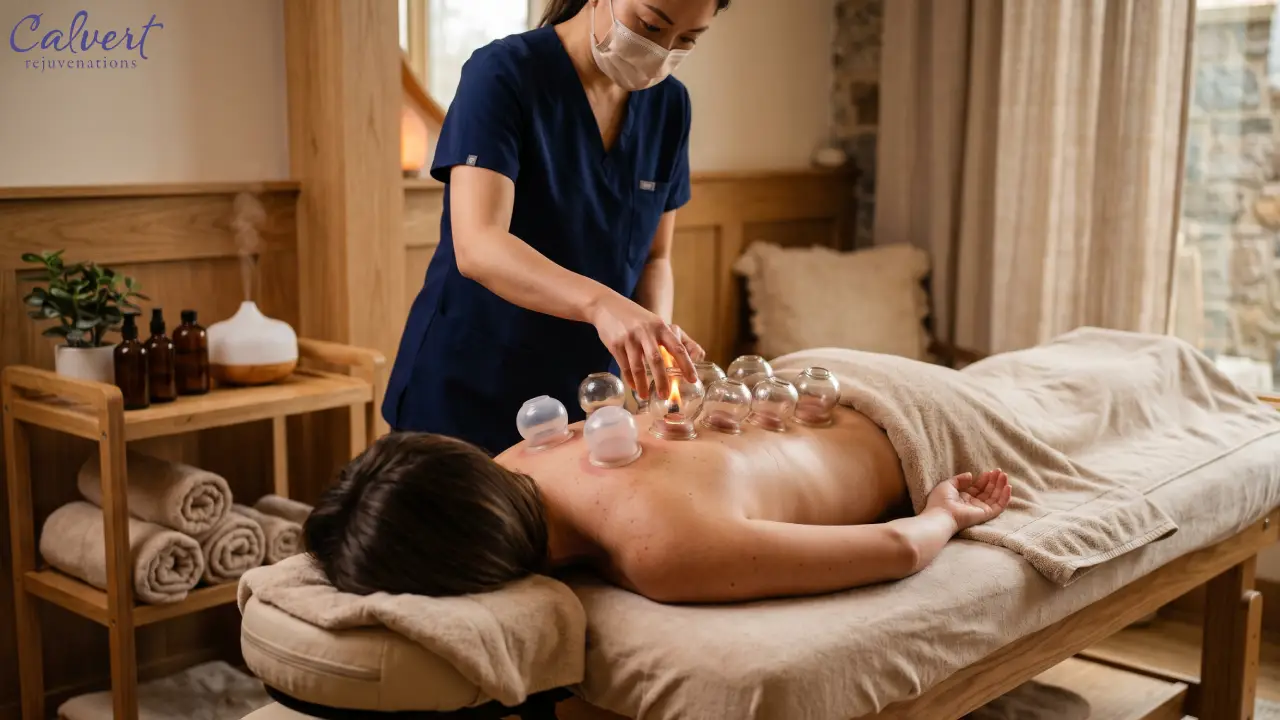
There’s a kind of tension that stretches, foam rollers, and even massage can’t seem to fully reach – the kind locked in the connective tissue just beneath the surface, pulling at your posture, disrupting your sleep, and weighing on your energy day after day.
Cupping therapy works differently. Instead of pressing down into muscle, it lifts – creating suction that decompresses tissue, draws circulation to stagnant areas, and triggers a deep release that many people describe as unlike anything else they’ve tried.
At Calvert Rejuvenations, cupping therapy is administered with genuine therapeutic precision – not as a trend, but as a clinically grounded treatment with a track record spanning thousands of years and growing modern research behind it.
What Is Cupping Therapy?
Cupping is a soft tissue therapy that uses specialized cups – typically silicone or glass – to create negative pressure on the skin and underlying muscle. The suction lifts the tissue rather than compressing it, separating layers of fascia, muscle, and skin that have become adhered or restricted over time.
This decompression effect:
- Opens fascial restrictions that manual pressure can’t easily access
- Draws fresh blood and lymphatic fluid into congested or poorly circulated areas
- Stimulates the nervous system into a parasympathetic (rest and repair) state
- Triggers the body’s natural healing response in areas of chronic tension or injury
Cupping can be performed statically – cups held in place – or dynamically, where the therapist glides the cups across the skin for broader coverage. At Calvert Rejuvenations, the approach is tailored to each client’s specific presentation and goals.
Why Reston & Herndon Residents Are Turning to Cupping
The communities around Reston and Herndon are high-output environments. Long commutes, demanding desk jobs, hybrid work schedules, and the constant low-grade pressure of modern life create predictable physical consequences:
- Chronic neck and shoulder stiffness
- Tight hip flexors and compressed lower backs from prolonged sitting
- Persistent upper back tension and poor posture
- Headaches and jaw tension
- Sluggish recovery after exercise or physical activity
- A general sense of physical heaviness that doesn’t resolve with rest
The Science Behind Cupping Therapy
Cupping’s benefits are not anecdotal. Research and clinical practice have identified several well-established mechanisms:
Myofascial decompression: Unlike compression-based therapies, cupping lifts tissue away from underlying structures. This separates layers of fascia that have become adhered through repetitive strain, poor posture, or injury – restoring glide and range of motion.
Increased microcirculation: The suction draws blood into areas of poor circulation, delivering oxygen and nutrients to hypoxic tissue and accelerating the removal of metabolic waste. This is why cupping marks (ecchymosis) sometimes appear – they’re an indicator of circulation being restored to areas that needed it.
Nervous system regulation: Like hot stone massage therapy, cupping stimulates the parasympathetic nervous system, helping the body shift out of a chronic stress state and into active recovery mode.
Lymphatic stimulation: Cupping supports movement of lymphatic fluid, which reduces local inflammation and supports immune function. This pairs especially well with lymphatic drainage massage for clients dealing with swelling or sluggish recovery.
Pain gate modulation: The sensory input from cupping interrupts pain signaling pathways, providing relief from both acute and chronic discomfort – a mechanism similar to that used in acupuncture.
Conditions Cupping Therapy Addresses Best
Chronic Neck & Shoulder Pain
One of the most common presentations therapists see in desk workers and professionals. Cupping decompresses the tissue along the upper trapezius, levator scapulae, and cervical spine – areas that hold an enormous amount of daily tension and rarely get full relief from compression-based techniques alone.
Lower Back Pain & Sciatica
Tight paraspinal muscles and fascial adhesions are frequent contributors to lower back pain. Cupping along the lumbar spine and gluteal region releases these restrictions and restores normal tissue mobility, often providing relief where massage alone has fallen short.
Postural Dysfunction from Desk Work
Prolonged sitting creates predictable patterns: tight hip flexors, rounded shoulders, forward head carriage. Cupping along the thoracic spine, chest, and anterior hips directly targets these compensatory patterns. Many clients combine this with deep tissue massage for a comprehensive structural correction.
Athletic Recovery & Performance
Cupping has become a well-known recovery tool in professional sports for good reason. It accelerates tissue recovery, reduces delayed onset muscle soreness (DOMS), and restores range of motion more quickly than passive rest alone. Athletes in the Reston and Herndon area use it as a regular part of their training cycle.
Respiratory Tension & Chest Tightness
Cupping on the upper back and between the shoulder blades has a long history of use for respiratory support – loosening the muscles that support breathing and creating a sense of openness in the chest.
Stress, Anxiety & Burnout
When the body carries chronic stress, it stores it in tissue – in the jaw, the shoulders, the diaphragm. Cupping, particularly when combined with other services like infrared sauna therapy or a spa package, creates a powerful nervous system reset that goes beyond what most people are able to achieve on their own.
What to Expect at Calvert Rejuvenations
Every cupping session is structured around your specific concerns – not a generic protocol.
1 Step: Intake & Assessment Your therapist will discuss your symptoms, history, lifestyle, and goals.
2 Step: Skin Preparation A light oil is applied to the treatment area to allow the cups to glide smoothly and protect the skin.
3 Step: Cup Placement & Treatment Cups are applied to targeted areas, creating the characteristic suction lift. Static cups may be held in place for several minutes on areas of deep restriction, while dynamic cupping is used across broader regions for lymphatic movement and fascial release. Pressure and duration are adjusted throughout based on your response.
4 Step: Integration & Manual Work In many sessions, cupping is combined with hands-on massage work – particularly for clients who also book therapeutic massage – to create a more complete treatment outcome.
5 Step: Aftercare Guidance You’ll leave with specific recommendations: hydration, temperature considerations for the treated areas, and movement guidance that helps the results integrate over the following 24-48 hours.
About Cupping Marks
Many people ask about the circular discoloration that can appear after cupping. These marks – sometimes called “cup kisses” – are not bruises. They result from blood being drawn into the superficial tissue, not from tissue being damaged.
Their color (ranging from light pink to deep red or purple) reflects the degree of stagnation in the treated area. Areas with good circulation typically show little to no marking; areas with chronic restriction often show deeper color. Marks typically resolve within 3-7 days.
Cupping vs. Massage: How They Compare
| Cupping Therapy | Therapeutic Massage | |
|---|---|---|
| Mechanism | Decompression (lift) | Compression (pressure) |
| Primary target | Fascia, lymphatics, circulation | Muscle tissue, nervous system |
| Best for | Fascial adhesions, poor circulation, chronic restriction | Muscle tension, relaxation, pain relief |
| Sensation | Pulling, warm, deeply releasing | Pressure, kneading, gliding |
| Marks | Possible; resolve in days | None |
For many clients, the most effective approach combines both. At Calvert Rejuvenations, therapists are skilled at integrating cupping into broader massage sessions to address multiple layers of tension in a single appointment.
How Cupping Fits Into a Complete Wellness Plan
Cupping delivers its best results when it’s part of a consistent wellness routine. At Calvert Rejuvenations, many clients layer cupping with complementary services for amplified outcomes:
- Infrared Sauna: Pre-session sauna warms tissue deeply, making cupping even more effective. Post-session use supports detox and recovery.
- Acupuncture: Traditional Chinese medicine origins unite these two therapies. Combined sessions address pain and systemic imbalance from multiple angles.
- Lymphatic Drainage Massage: Cupping initiates lymphatic movement; lymphatic drainage extends and deepens the effect, particularly for clients dealing with inflammation or immune sluggishness.
- Hot Stone Massage: Heat and decompression together create some of the most thorough soft tissue release available without clinical intervention.
- Specialty Facials: Facial cupping is increasingly used for circulation, lymphatic drainage, and natural facial toning – ask your therapist about this option.
Clients who commit to a regular cadence – typically every 2 to 4 weeks – consistently report the most lasting improvements. For those making wellness a long-term investment, the Calvert Elite Membership offers flexible monthly credits applicable to cupping sessions and any other service.
Benefits Clients Notice Over Time
Physical
- Reduced muscle tightness and fascial restriction
- Less neck, shoulder, and back pain
- Improved range of motion
- Faster recovery after exercise or physical exertion
Mental & Emotional
- Lower anxiety and a quieter nervous system
- Improved mental clarity and focus
- Greater emotional ease and reduced reactivity
- A sense of lightness and openness in the body
Sleep & Energy
- Deeper, more restorative sleep
- Reduced daytime fatigue
- More consistent, sustainable energy throughout the day
Who Benefits Most from Cupping Therapy?
Cupping at Calvert Rejuvenations is particularly effective for:
- Desk workers and professionals carrying chronic neck, shoulder, or back tension
- Athletes seeking faster recovery and improved performance
- Anyone dealing with fascial restriction, reduced range of motion, or postural pain
- People managing high stress, anxiety, or burnout
- Clients who have tried massage and feel like something deeper isn’t releasing
- Those with poor circulation or sluggish lymphatic function
- Anyone looking to reset the nervous system and restore a genuine sense of physical ease
Why Choose Calvert Rejuvenations for Cupping in Reston & Herndon?
Cupping is increasingly available across the Northern Virginia area – but the quality and intent behind each session varies significantly.
At Calvert Rejuvenations, cupping is administered by experienced therapists who understand musculoskeletal anatomy, fascial systems, and how to read the body’s response in real time. Sessions are structured around your specific needs, not a one-size-fits-all protocol. And the goal extends beyond how you feel on the table – it’s about measurable improvement in your daily life.
The difference isn’t just the treatment. It’s the expertise and intention behind it.
How Often Should You Book Cupping?
Frequency depends on your specific goals and how your body responds:
- Every 1-2 weeks: For acute pain, chronic restriction, or active recovery
- Every 2-4 weeks: For ongoing maintenance and nervous system balance
- Once a month: For general wellness, prevention, and performance support
Book Your Cupping Therapy Session in Reston & Herndon, VA
At Calvert Rejuvenations, every session is personalized, therapeutic, and designed around results you can feel – not just in the treatment room, but in how you move, sleep, and feel throughout your week.
Call: 571-323-1088 to book your appointment, or book online here.
You don’t have to keep carrying what your body has been holding. Relief is available – and it starts with one session.
FAQs
Q: Is cupping therapy painful?
A: Most clients describe cupping as an unusual but deeply satisfying sensation – a strong pulling feeling rather than pain. Suction levels are always adjusted to your comfort.
Q: How long does a cupping session take?
A: Standalone cupping sessions at Calvert Rejuvenations are typically 30 to 60 minutes.
Q: Will the marks hurt?
A: Cupping marks are generally not painful. Some clients report mild tenderness in marked areas for a day or two, similar to the feeling after a deep tissue massage. The marks themselves are not bruises and do not indicate injury.
Q: Can cupping help with headaches?
A: Yes. Cupping along the upper back, neck, and base of the skull addresses many of the muscular contributors to tension headaches and cervicogenic headaches. Many clients report a significant reduction in headache frequency with regular sessions.