Acupuncture for Neuropathy in Herndon & Reston, VA – CIPN Treatment
Numbness that does not go away. A burning sensation in the feet at 2am. Fingers that cannot feel what they are holding. Legs that feel unreliable on stairs.
At Calvert Rejuvenations in Herndon, VA, Dr. Calvert Thompson and Dr. Rubina Ogno treat neuropathy differently. They are Doctors of Acupuncture with graduate-level training in both Eastern and Western medicine. Their goal is not simply to reduce pain. It is to restore sensation, improve function, rebuild confidence in movement, and support the nervous system’s capacity to heal.
We serve patients from Herndon, Reston, Sterling, Fairfax, and across Northern Virginia. This includes patients currently undergoing chemotherapy and cancer survivors managing persistent neuropathy. Explore our acupuncture services or read on to understand how this treatment works.
What Is Peripheral Neuropathy – and What Causes It?
Peripheral neuropathy occurs when peripheral nerves are damaged or disrupted. These nerves carry sensory and motor information between the brain, spinal cord, and the rest of the body. When they stop working properly, the results vary widely from patient to patient.
Common symptoms include:
- Numbness or decreased sensation in the hands or feet
- Tingling or persistent pins and needles
- Burning, electrical, or shooting sensations
- Painful sensitivity to light touch
- Difficulty distinguishing temperature
- Weakness or heaviness in the hands or legs
- Loss of fine motor control
- Balance instability and difficulty walking
Common causes include chemotherapy drugs – particularly taxanes, platinum-based drugs, vinca alkaloids, and bortezomib. Diabetes, autoimmune conditions, and vitamin deficiencies also cause neuropathy. Chemotherapy-induced peripheral neuropathy (CIPN) is among the most persistent forms. Symptoms often continue for months or years after cancer treatment ends.
Why Standard Treatment Often Falls Short
Most conventional approaches focus on pain management. Medications like gabapentin and duloxetine reduce pain perception. But they do not address the underlying nerve dysfunction causing it.
Many patients are not primarily troubled by pain. Their main complaints are numbness, loss of sensation, and balance problems. For these patients, standard pain medications offer very little.
This is the gap acupuncture and electroacupuncture at Calvert Rejuvenations targets directly. Our treatment goals go beyond symptom suppression. We focus on what patients actually need to regain – sensation, function, proprioception, and physical confidence.
What the Research Shows
The evidence for acupuncture in peripheral neuropathy has grown considerably in recent years.
A randomized clinical trial from Memorial Sloan Kettering Cancer Center, published in JAMA Network Open, compared acupuncture against sham acupuncture and usual care. Patients had moderate to severe CIPN. After eight weeks, the acupuncture group saw significant improvements in pain, tingling, and numbness. The other groups did not.
A 2025 randomized controlled trial measured both patient-reported scores and objective nerve-conduction testing. Researchers found improvements in sensory and motor nerve-conduction values – not just symptoms. This suggests acupuncture influences peripheral nerve function at a physiological level.
What Electroacupuncture Research Shows
A 2024 systematic review examined 33 studies involving more than 2,000 participants. Acupuncture-related therapies improved CIPN symptoms, pain, and quality of life. Acupuncture combined with electrical stimulation ranked highest for overall symptom improvement.
A separate 2024 randomized trial studied electroacupuncture during taxane chemotherapy. The electroacupuncture group showed lower CIPN incidence at 24 weeks. Researchers also reported improvements in nerve-conduction measurements and quality-of-life outcomes.
No single protocol works for every patient. These findings do, however, guide how Dr. Thompson and Dr. Ogno approach treatment at our Herndon clinic.
Acupuncture and Electroacupuncture – How They Work
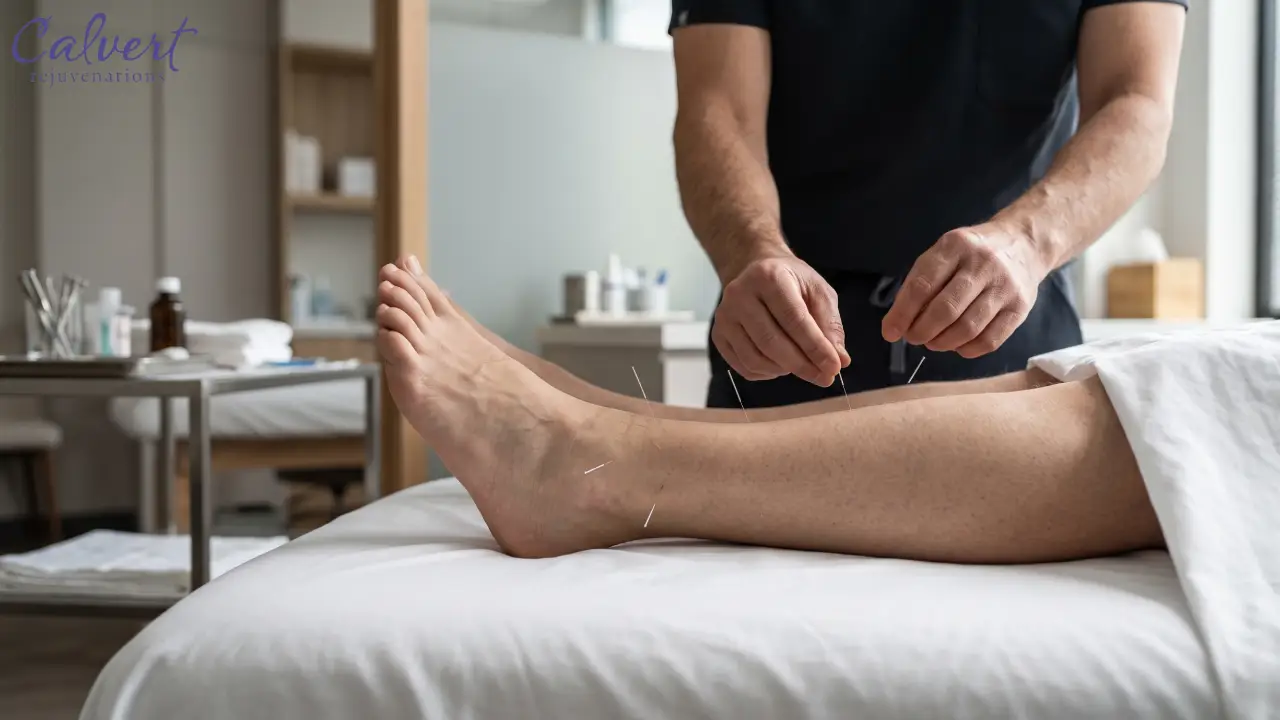
Traditional acupuncture uses fine sterile needles at specific anatomical points. For neuropathy, needles target the affected areas and peripheral nerve pathways in the arms, hands, legs, and feet. This stimulates the nervous system, improves local circulation, and supports the body’s natural regulatory processes.
Electroacupuncture adds a gentle electrical current to selected needles. Most patients feel a mild tapping or pulsing sensation. This direct neural stimulation is particularly relevant for neuropathy. It activates affected nerve pathways in a way that traditional needling alone does not fully replicate.
Dr. Thompson and Dr. Ogno decide whether to use traditional acupuncture, electroacupuncture, or both based on each patient’s symptoms, medical history, medications, and treatment stage.
What Treatment at Calvert Rejuvenations Targets
Restoring Sensation
When numbness is the primary complaint, treatment focuses on stimulating the affected areas and nerve pathways. The aim is to improve sensory signal transmission. This is not pain management. It is working to restore what the nervous system has lost.
Supporting Circulation and Nerve Health
Peripheral nerve health depends on healthy microvascular circulation. Acupuncture and electroacupuncture may improve local blood flow around affected nerves. Researchers continue to study this mechanism as part of how acupuncture supports nerve recovery.
Improving Balance and Proprioception
Sensory input from the feet tells the nervous system where the body is in space. When neuropathy disrupts this feedback, patients feel unsteady and at increased fall risk. Restoring even partial sensory input can produce real improvements in daily movement. Patients with significant gait or balance problems may also benefit from coordinated physical therapy care.
Reducing Neuropathic Pain
For patients with burning, shooting, or hypersensitive pain, treatment is adjusted accordingly. Acupuncture reduces neuropathic pain through multiple mechanisms. These include endogenous opioid release, descending pain inhibition, and local anti-inflammatory effects.
Chinese Herbal Medicine as a Supporting Layer
Dr. Thompson and Dr. Ogno may incorporate Chinese herbal medicine into a neuropathy plan where appropriate.
For patients in active cancer treatment, this requires careful evaluation. Herbal formulas must be assessed against the patient’s chemotherapy regimen, medications, blood counts, and liver and kidney function. We coordinate with the oncology team before recommending any herbal support. We do not advise patients undergoing active cancer treatment to self-prescribe herbal formulas.
When the clinical picture is appropriate, herbal medicine adds a meaningful internal layer of support. It is particularly useful when neuropathy connects to systemic circulation issues, inflammation, or constitutional factors.
Supporting the Whole Patient
Peripheral neuropathy rarely exists alone in cancer patients. Many patients also deal with fatigue, nausea, sleep disruption, anxiety, and digestive issues alongside their neuropathy.
Acupuncture addresses the nervous system and whole-body regulatory function. A single session can target multiple concurrent concerns. Patients coming in for CIPN often also gain benefit for chemotherapy-related nausea, insomnia, or stress.
Between Sessions
Our infrared sauna supports patients between appointments. It improves circulation, supports nervous system downregulation, and reduces whole-body inflammation. Many neuropathy patients find it extends the relief window between acupuncture sessions.
Care Team Coordination
We take a genuine care-team approach. With patient consent, Dr. Thompson and Dr. Ogno communicate with oncologists, primary care physicians, and physical therapists. Acupuncture works alongside conventional medical care – it does not replace it. Patients experiencing new or worsening neuropathy symptoms during chemotherapy should always inform their oncology team first. Changes in neuropathy can affect chemotherapy dosing decisions.
Who Should Consider This Treatment
- Cancer patients experiencing CIPN during active chemotherapy
- Cancer survivors with persistent neuropathy after treatment
- Patients with diabetic peripheral neuropathy seeking integrative support
- Those with idiopathic neuropathy who have not responded to standard treatment
- Patients whose main concern is numbness, lost sensation, or balance problems rather than pain
- Anyone in Herndon, Reston, Sterling, Ashburn, Fairfax, or Northern Virginia looking for evidence-informed neuropathy treatment
Patients do not need to wait until neuropathy becomes severe. Research suggests earlier intervention may reduce the development or severity of CIPN. A consultation with Dr. Thompson or Dr. Ogno will clarify whether and when acupuncture is appropriate for your situation.
Why Calvert Rejuvenations
Dr. Calvert Thompson and Dr. Rubina Ogno hold doctorates in the Science of Acupuncture. They carry advanced certifications in orthopedic and oncology supportive care. Their approach to neuropathy follows current clinical research. They do not apply a standardized protocol to every patient regardless of symptom pattern or medical history.
Calvert Rejuvenations has served patients across Herndon, Reston, and Northern Virginia since 2003. We have been voted Best of Northern Virginia since 2009 and recognized as a Favorite Spa by Washingtonian Magazine.
If standard neuropathy treatment has not given you the functional improvement you need, acupuncture and electroacupuncture at Calvert Rejuvenations may be the missing layer of your care.
Call: 571-323-1088 or book your appointment now.
Frequently Asked Questions
Q: Can acupuncture help neuropathy that has been present for years?
A: Yes – but realistic expectations matter. Chronic neuropathy may improve more slowly than recent-onset cases. Many patients with long-standing symptoms still experience meaningful functional gains with consistent treatment. Your consultation will help set a realistic picture based on your specific history.
Q: How many sessions before I notice a difference?
A: Most patients notice change within 4 to 6 sessions. Significant improvement in sensation and balance typically develops over 8 to 12 sessions. Neuropathy treatment works toward nerve-level change – it takes longer than treating acute pain.
Q: Is acupuncture safe during chemotherapy?
A: For many patients, yes. But individual assessment is required. Blood counts, infection risk, port placement, and the specific chemotherapy regimen all factor in. Dr. Thompson and Dr. Ogno work with your oncology team to confirm safety before proceeding.
Q: Is electroacupuncture painful?
A: No. Most patients feel a mild tapping or buzzing sensation. Intensity is always adjusted to patient comfort. It stays well below any threshold of discomfort throughout the session.
Q: Can I receive acupuncture alongside my other medical treatments?
A: In most cases, yes. We coordinate with your other providers when appropriate. New or worsening symptoms should always go to your primary physician or oncologist first.