Retinaldehyde Treatment in Herndon & Reston, VA – The Smarter Retinol Alternative
Retinol has a reputation. Dermatologists recommend it. Beauty editors write about it. Skincare brands build entire product lines around it. And if you have ever actually used it consistently, you probably know what comes next. The flaking. The redness. The weeks of looking worse before you look better – if you look better at all. The sun sensitivity that means you have to choose between treating your skin and enjoying summer.
At Calvert Rejuvenations in Herndon, VA, we stopped recommending retinol years ago. Not because it does not work – it does, after a fashion – but because there is a significantly better option that produces comparable collagen-stimulating results without the inflammation, without the irritation, and without the skin sensitivity that makes retinol such a difficult long-term commitment. That option is retinaldehyde. And if you have never heard of it, you are about to understand why it should have been the recommendation all along. Explore our specialty facials or read on to understand what retinaldehyde actually is and why it works better. Book your appointment now and let our Master Estheticians build a retinaldehyde treatment protocol around your skin.
The Vitamin A Conversion Chain – Why Retinaldehyde Is Different
To understand why retinaldehyde is a smarter choice, you need to understand how Vitamin A works in the skin. It does not work as a single ingredient. It works as a conversion chain.
The body converts Beta Carotene into Retinol. Retinol converts into Retinaldehyde. Retinaldehyde converts into Retinoic Acid – which is what Retin-A is. Every form of Vitamin A in skincare is working toward the same end point. The difference is where you enter the chain and what happens to your skin along the way.
Retin-A (Retinoic Acid) is the end product. It is the most active form and it requires a prescription because the irritation, sensitivity, and inflammatory response it produces at the skin surface is significant enough to require medical supervision. Eight weeks of skin looking worse before it looks better – redness, peeling, flaking, sun sensitivity – is the standard experience. Doctors warn against using it alongside glycolic acid, vitamin C, or waxing. It is not recommended for rosacea or pregnancy.
Retinol is the over-the-counter compromise – less active than Retin-A, but it still requires conversion through retinaldehyde before it does anything useful. That conversion process is inefficient and produces inflammatory byproducts along the way. The result is a milder version of the same irritation, with results that are correspondingly milder too.
Retinaldehyde sits one step before Retin-A in the conversion chain. It is substantially more active than retinol – approximately 500 times more active, along with Retinoic Acid, than their Vitamin A counterparts. This means smaller amounts achieve the desired result. It stimulates collagen production at a level that rivals Retin-A. And it does this without the inflammatory cascade that makes Retin-A so difficult to use – making it effective and safe even for rosacea, sensitive skin, and pregnancy.
This is not a marginal difference. It is a fundamental one.
Why Retinol and Retin-A Create Problems They Are Supposed to Solve
The core paradox of retinol and Retin-A is this. Both treatments accelerate collagen production – which is the goal. But both also create inflammation in the process. And inflammation is one of the primary drivers of premature aging.
Sun sensitivity is the most immediately obvious problem. Retinol and Retin-A make the skin significantly more vulnerable to UV damage during use – which means that if you are applying them at night and going outdoors during the day without rigorous sun protection, you are potentially accelerating the very sun damage you are trying to treat. The EWG (Environmental Working Group) has raised concerns about retinol and its potential to speed the development of skin tumors and lesions on sun-exposed skin. The FDA and health agencies in Norway and Germany have raised concerns about daily retinol use contributing to excessive Vitamin A intake in pregnant women.
Rosacea and reactive skin types fare worst. Retin-A is explicitly not recommended for rosacea. The inflammatory response it triggers directly aggravates a condition characterized by chronic skin inflammation. For a significant portion of the people who most want the anti-aging benefits of Vitamin A therapy, the standard recommendations simply do not apply safely.
Retinaldehyde avoids all of this. It does not cause inflammation or skin sensitivity and it is completely stable – unlike retinol, which oxidizes and loses efficacy quickly. It is safe for rosacea as well as during pregnancy. And when formulated correctly, it produces results that make the retinol vs Retin-A debate largely irrelevant.
Osmosis Retinaldehyde – The Formulation That Makes the Difference
Not all retinaldehyde products deliver the same result. Retinaldehyde is a large molecule. It has difficulty penetrating through the epidermis to reach the dermal layer where collagen production actually happens. Without a delivery system that addresses this, even good retinaldehyde faces an absorption barrier that limits its effectiveness.
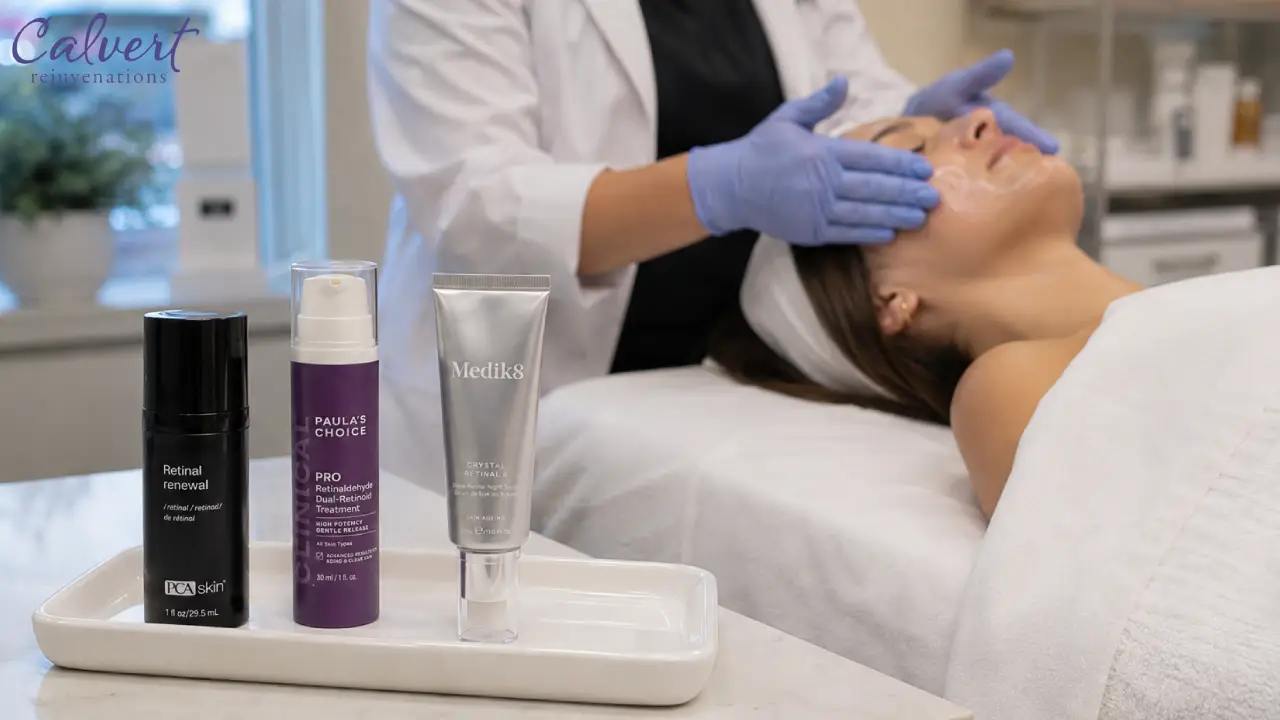
At Calvert Rejuvenations, the retinaldehyde serums we use and recommend are from Osmosis – a professional-grade clinical skincare line built around the specific challenge of getting Vitamin A to where the skin can actually use it.
Osmosis incorporates retinaldehyde into liposomes – microscopic lipid-based delivery vehicles that dramatically enhance penetration through the epidermis and simultaneously prevent the oxidation that degrades retinaldehyde before it reaches the target tissue. The result is a retinaldehyde serum that actually gets to the dermal layer intact, in a form the skin can convert and use, without triggering the surface inflammatory response that makes conventional Vitamin A therapy such a difficult experience.
The Osmosis Treatment Vitamin A serums are designed around a specific philosophy – allowing the skin to remodel itself through increased nutrition, immune repair, and collagen and elasticity production. This is not aggressive chemical stimulation. It is supported, intelligent skin renewal that works with the skin’s own biology rather than forcing a response that comes at the cost of inflammation and barrier compromise.
What Retinaldehyde Treatment at Calvert Rejuvenations Actually Produces
The benefits of consistent retinaldehyde treatment – through professional application and a supported home care protocol – are the same benefits people seek from retinol and Retin-A, delivered more safely and more comfortably.
Collagen Stimulation and Firming
Collagen gives skin its structure, firmness, and elasticity. UV exposure breaks it down. Age slows its production. Retinaldehyde directly stimulates fibroblast activity – the cells responsible for producing new collagen – at a level that rivals Retin-A without the inflammatory trade-off. Over a consistent course of treatment, the skin becomes measurably firmer, fine lines soften, and the overall texture improves in a way that looks genuinely healthier rather than just temporarily smoothed.
Cell Turnover and Renewal
Retinaldehyde accelerates cell turnover – the rate at which new skin cells replace old, dull, pigmented ones at the surface. This produces progressive improvement in skin tone, clarity, and radiance that builds over months of consistent use. Unlike the exfoliation-only approaches that strip the surface without changing what is produced below it, retinaldehyde changes the rate and quality of cell production at the source.
Hyperpigmentation and Uneven Tone
Accelerated cell turnover combined with collagen stimulation produces meaningful improvement in post-inflammatory hyperpigmentation, sun damage, and uneven tone. The pigmented cells that have accumulated at the surface turn over faster. The collagen-rich new tissue replacing them is more evenly toned and more structurally sound. For clients already addressing pigmentation through other treatments at Calvert Rejuvenations, retinaldehyde adds a home-care and professional treatment layer that compounds results.
Immune Repair and Skin Resilience
This is the aspect of Osmosis retinaldehyde treatment that most distinguishes it from conventional Vitamin A approaches. Rather than forcing a stress response and managing the fallout, Osmosis serums support the skin’s immune function – improving the skin’s capacity to repair itself, respond to environmental stress, and maintain the barrier integrity that is the foundation of genuinely healthy skin. Clients who have spent years on the exfoliation and irritation carousel consistently describe their skin feeling fundamentally different after a period of retinaldehyde-based care – more resilient, less reactive, and more capable of holding improvement between treatments.
Who Benefits Most From Retinaldehyde Treatment at Calvert Rejuvenations
The honest answer is almost everyone who wants Vitamin A benefits in their skincare. But the clients for whom retinaldehyde is most specifically the right choice include:
- Anyone who has tried retinol and experienced irritation, peeling, or sensitization that made consistent use difficult
- Clients with rosacea or reactive skin for whom Retin-A is contraindicated
- Pregnant or breastfeeding clients who want safe anti-aging skincare support
- Those with darker skin tones where retinol-induced inflammation carries real post-inflammatory hyperpigmentation risk
- Clients in their 20s beginning preventative collagen support who want a sustainable long-term approach
- Anyone currently using retinol who wants to upgrade to a more effective, less irritating option
- Clients who have been told their skin is too sensitive for Vitamin A therapy
If your skin has reacted badly to retinol in the past, that reaction was not a sign that Vitamin A therapy is wrong for you. It was a sign that retinol – specifically – was the wrong form of Vitamin A for your skin. Retinaldehyde is a different conversation entirely.
How Retinaldehyde Integrates With Professional Treatment at Calvert Rejuvenations
Retinaldehyde at Calvert Rejuvenations is not just a product recommendation. It is a professional treatment approach that integrates with our broader clinical skincare offerings.
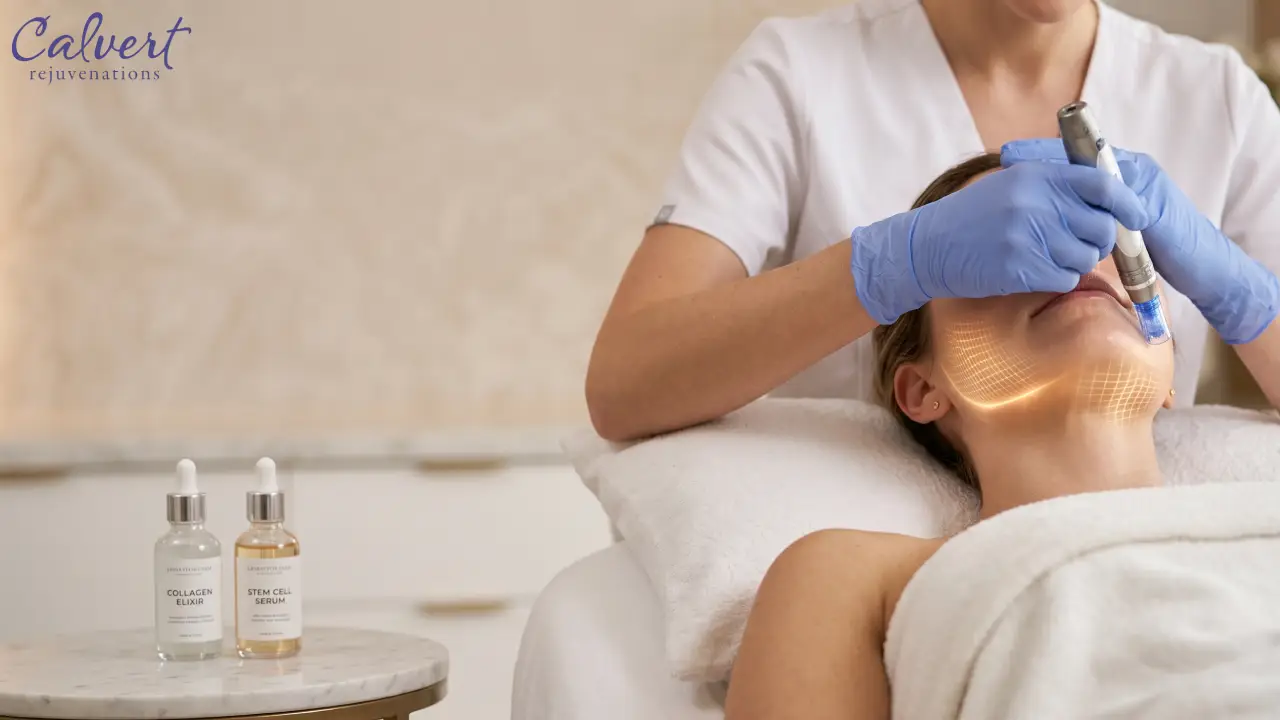
Our Master Estheticians incorporate Osmosis retinaldehyde into treatment protocols alongside our nano infusion facial – using the nano channels created during treatment to deliver retinaldehyde serums significantly deeper into the dermis than topical application achieves. This combination produces a collagen-stimulating response that neither approach delivers as effectively alone.
For clients addressing dark spots and uneven tone alongside their anti-aging goals, retinaldehyde integrates naturally into the broader pigmentation treatment at Calvert Rejuvenations – combining professional brightening treatments with a retinaldehyde home care regimen that continues the correction between sessions.
Clients receiving microneedling treatment in Herndon and Reston benefit from retinaldehyde as a supporting home care product between sessions – the collagen stimulation from microneedling and the ongoing collagen support from retinaldehyde create a compounding effect that produces results faster than either alone.
For clients focused on brightening and resurfacing, the iS Clinical Fire and Ice Facial pairs naturally with a retinaldehyde home care protocol – the professional resurfacing session accelerates surface cell turnover while the retinaldehyde continues building collagen and supporting skin renewal between appointments.
The Professional vs At-Home Difference
Osmosis retinaldehyde serums are available as home care products – and using them consistently at home is genuinely valuable. But there is a meaningful difference between home application and professional treatment.
Our Master Estheticians assess your skin at every appointment. They adjust the retinaldehyde concentration and delivery method based on your skin’s current condition, sensitivity level, and how it has responded since your last session. They pair retinaldehyde with the professional treatments that amplify its effectiveness – nano infusion, LED therapy, microneedling, or resurfacing treatments – in a sequence that your skin can absorb and benefit from rather than one that overwhelms it.
The professional treatment layer is not optional for clients with complex skin concerns. It is what distinguishes meaningful, lasting improvement from the incremental results that home care alone produces.
Frequently Asked Questions
Q: I have used retinol for years with good results. Why should I switch to retinaldehyde?
A: If retinol is working for you without irritation and you are happy with your results, it is not broken. But retinaldehyde is more active and more efficient – it delivers stronger collagen stimulation with less inflammatory cost. Many clients who switch after years of retinol use describe their skin improving beyond the plateau they had reached. The switch is worth considering if you want more from your Vitamin A treatment, or if you have been managing tolerable but persistent irritation.
Q: Can I use retinaldehyde if I have rosacea?
A: Yes. Unlike Retin-A, retinaldehyde does not trigger the inflammatory response that aggravates rosacea. It is one of the few effective Vitamin A treatment options specifically safe for reactive and rosacea-prone skin. Our Master Estheticians will build a protocol around your skin’s specific sensitivity level at your consultation.
Q: Is retinaldehyde safe during pregnancy?
A: Yes. Unlike Retin-A and high-dose retinol, retinaldehyde is considered safe for use during pregnancy. Always confirm with your obstetrician before beginning any new skincare treatment during pregnancy. Our team will advise you on the full protocol at your consultation.
Q: How long before I see results from retinaldehyde treatment?
A: Most clients notice improved skin clarity and texture within 4 to 6 weeks of consistent use. Meaningful collagen-based improvement – firming, softening of fine lines, progressive tone correction – develops over 3 to 6 months of consistent treatment. This is comparable to retinol timelines but without the weeks of looking worse first.
Q: Can I use retinaldehyde alongside other active ingredients?
A: Generally yes – unlike Retin-A, retinaldehyde does not require the same level of restriction around other actives. Your Master Esthetician will review your current skincare routine at your consultation and advise on sequencing and compatibility based on your specific products and skin goals.
Q: Where is Calvert Rejuvenations located?
A: We are located at 485 Carlisle Dr, Herndon, VA 20170 – serving clients from Reston, Herndon, Ashburn, Sterling, Fairfax, and across Northern Virginia.
Voted Best of Northern Virginia since 2009 and a Washingtonian Magazine Favorite Spa. Calvert Rejuvenations has been delivering clinical skincare results to clients across Herndon and Reston for over two decades.
Call: 571-323-1088 or book your appointment now and let our Master Estheticians build a retinaldehyde treatment protocol that finally gives your skin what retinol promised.